

WORLD SOIL DAY 2027
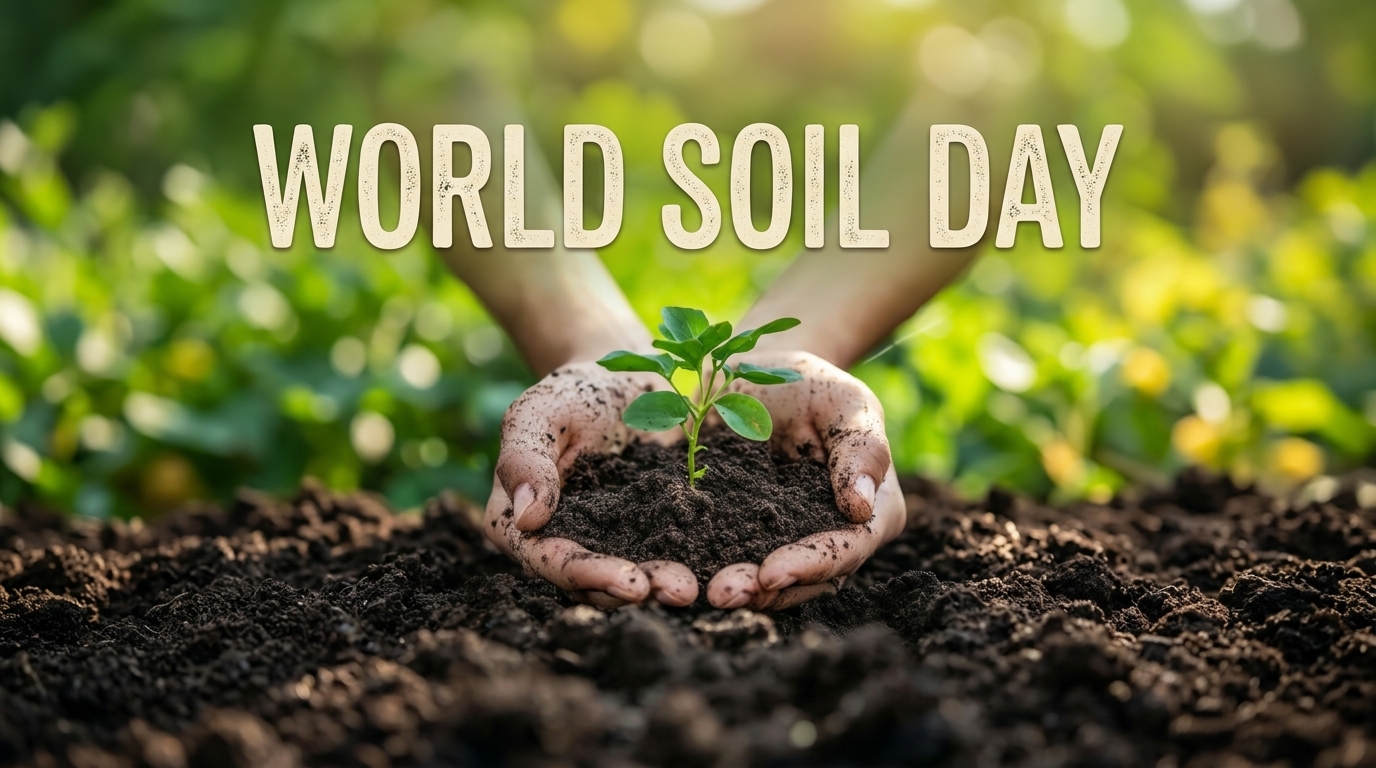
WORLD SOIL DAY 2027
Beneath our feet lies one of the most important resources on Earth. Soil supports the food we eat, the water we depend on, the plants and ecosystems around us, and the livelihoods of millions of people. Yet, soil is often taken for granted.
Pollution, erosion, deforestation, unsustainable farming practices, poor waste management, excessive use of chemicals, urbanization and the effects of climate change are placing increasing pressure on soil health.
World Soil Day, observed every year on 5 December, reminds us that protecting soil is essential for protecting our environment, our food systems, our health and our future.
SOIL IS MORE THAN DIRT
Soil is a living ecosystem. It contains minerals, organic matter, water, air and countless organisms that work together to support plant growth and maintain healthy ecosystems. Healthy soil helps plants obtain nutrients, supports biodiversity, stores carbon, filters water and contributes to productive agriculture. When soil becomes degraded, polluted or eroded, these important functions can be weakened.
Healthy soil supports healthy life.
WHY DOES SOIL MATTER?
Almost everything we eat is connected to soil.
Crops need healthy soil to grow.
Farmers depend on productive land to support their livelihoods.
Animals depend on plants that grow in healthy soil.
Communities depend on agriculture for food and income.
Soil also plays an important role in regulating water and supporting ecosystems.
When we protect soil, we are protecting much more than land.
We are protecting food, livelihoods, biodiversity, water and future generations.
SOIL AND FOOD SECURITY
Healthy soil is fundamental to sustainable agriculture. When soil loses nutrients, becomes compacted, contaminated or eroded, agricultural productivity can decline. Farmers may then face increased production challenges, while communities can experience greater pressure on food availability and livelihoods. Protecting soil through sustainable agricultural practices can help maintain productive land for present and future generations.
Farmers can contribute by adopting practices such as:
- Crop rotation
- Cover cropping
- Appropriate use of organic matter and compost
- Efficient water management
- Agroforestry and tree planting
- Reducing unnecessary soil disturbance
- Supporting soil biodiversity
- Preventing erosion.
Healthy soil is an investment in food security
SOIL AND WATER ARE CONNECTED
What happens to soil can affect our water. Poor land management, erosion and pollution can cause sediments, chemicals and other contaminants to enter rivers, streams and other water sources. Healthy soils can help retain and filter water, reducing some forms of runoff and supporting healthier ecosystems. Protecting soil therefore also means protecting our water resources.
SOIL AND CLIMATE CHANGE
Soil plays an important role in the global carbon cycle. Healthy soils can store carbon, while land degradation and certain unsustainable practices can contribute to the release of greenhouse gases. Protecting and restoring soil is therefore an important part of building climate-resilient landscapes and sustainable agricultural systems.
Climate change can also increase pressure on soil through droughts, intense rainfall, flooding and changing growing conditions. This makes soil conservation even more important.
SOIL AND BIODIVERSITY
Healthy soil is home to an incredible variety of organisms. Earthworms, fungi, bacteria, insects and other microorganisms contribute to processes that help maintain soil structure, cycle nutrients and support plant growth. These organisms may be small, but their contribution is enormous. When soil is degraded or contaminated, the organisms that depend on it can also be affected. Protecting soil means protecting an entire underground ecosystem.
SOIL POLLUTION IS A PUBLIC HEALTH CONCERN
Improper disposal of waste, excessive use of certain chemicals, industrial pollution and other harmful practices can contaminate soil. Polluted soil can affect crops, animals, water sources and ultimately human health.
Communities can help reduce soil pollution by:
- Disposing of waste properly.
- Avoiding indiscriminate dumping.
- Managing chemicals responsibly.
- Reducing unnecessary use of harmful substances.
- Protecting agricultural land from contamination.
- Supporting proper waste management systems.
- Reporting environmental pollution through appropriate channels.
What we put into the soil can eventually affect what we eat, drink and breathe.
URBAN COMMUNITIES HAVE A ROLE TO PLAY
Soil protection is not only the responsibility of farmers. People living in towns and cities can also contribute. We can protect soil by planting trees and vegetation, avoiding unnecessary destruction of green spaces, managing household waste responsibly and supporting community environmental initiatives. Even small spaces can contribute to healthier urban environments through gardens, trees and responsible land management.
WHAT CAN FARMERS DO?
Farmers are among the most important stewards of soil.
Sustainable practices can help maintain soil fertility and reduce degradation.
These may include:
🌱 Maintaining ground cover
🌾 Practicing crop rotation
🌳 Integrating trees where appropriate
🪱 Supporting soil organisms
💧 Preventing excessive water runoff
♻️ Using organic matter appropriately
🚜 Minimizing unnecessary soil disturbance
🛡️ Protecting land from erosion
Supporting farmers with knowledge, resources, technology and appropriate policies is essential to long-term soil conservation.
WHAT CAN WE ALL DO?
Protecting soil may seem like a responsibility for governments, farmers and environmental organizations, but everyone has a role.
At home:
- Dispose of waste responsibly.
- Avoid dumping chemicals onto the ground.
- Compost suitable organic waste where appropriate.
- Plant and care for vegetation.
In our communities:
- Participate in environmental clean-up activities.
- Support tree planting and restoration initiatives.
- Protect green spaces.
- Discourage indiscriminate dumping and harmful land practices.
In schools:
- Teach students about soil, agriculture and environmental protection.
- Encourage school gardens and environmental clubs.
- Help young people understand the connection between soil, food and health.
As institutions and organizations:
- Promote sustainable environmental practices.
- Reduce waste and pollution.
- Support community awareness and conservation initiatives.
WE CANNOT CREATE A HEALTHY FUTURE ON DEGRADED SOIL
Food security, environmental sustainability, climate resilience and healthy communities are all connected to the condition of the land beneath us. If we allow soil to become degraded, polluted and exhausted, future generations will inherit a more difficult world. But if we protect, restore and manage soil responsibly, we can help create productive farms, healthier ecosystems, stronger communities and a more sustainable future.
THIS WORLD SOIL DAY, LET US TAKE ACTION
Let us stop treating soil as something limitless.
Let us protect agricultural land.
Let us reduce pollution.
Let us prevent erosion.
Let us support sustainable farming.
Let us plant and protect vegetation.
Let us manage waste responsibly.
Let us educate our communities about the importance of soil.
Let us support farmers who are working to protect the land.
And let us remember that every meal we eat is connected, in one way or another, to the soil.
OUR MESSAGE
On this World Soil Day 2027, SHEAD Centre calls on individuals, farmers, communities, institutions and decision-makers to recognize the importance of soil and take meaningful action to protect this vital natural resource.
Protect the soil.
Protect our food.
Protect our water.
Protect biodiversity.
Protect our future.
Healthy soil is not just an environmental issue.
It is a food security issue.
It is a livelihood issue.
It is a climate issue.
It is a public health issue.
It is a future issue.
What we do to the soil today will shape the world we leave behind tomorrow.