
INTERNATIONAL DAY FOR PERSONS WITH DISABILITIES 2027
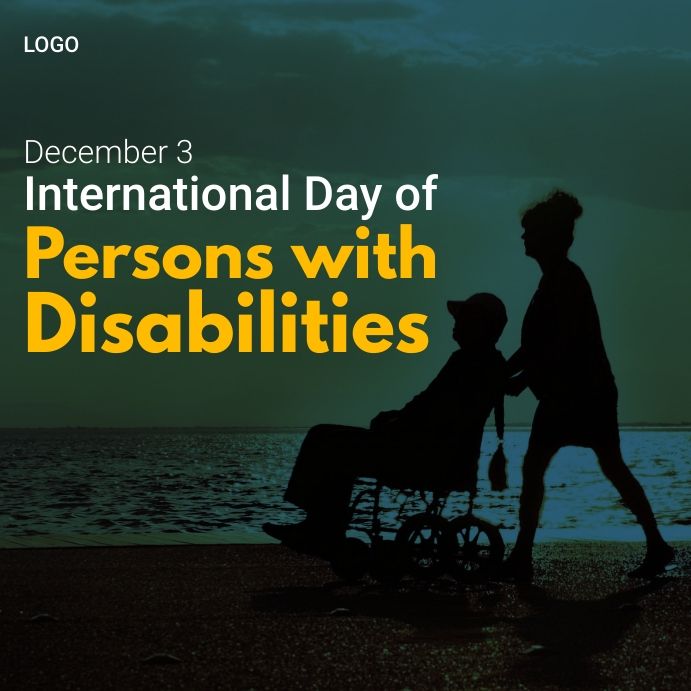
INTERNATIONAL DAY OF PERSONS WITH DISABILITIES 2027
Every person deserves to live with dignity, participate fully in society and have the opportunity to reach their potential. Yet, many persons with disabilities continue to face barriers that prevent them from accessing education, healthcare, employment, transportation, technology, public spaces and other essential services. These barriers are not always created by disability itself. They are often created by inaccessible environments, discrimination, exclusion, stigma and systems that fail to consider everyone’s needs.
The International Day of Persons with Disabilities, observed every year on 3 December, is an opportunity to promote awareness of disability issues, uphold the dignity and rights of persons with disabilities, and mobilize support for an inclusive society where everyone can participate equally.
DISABILITY DOES NOT REDUCE A PERSON’S WORTH
A disability does not take away a person’s dignity, intelligence, talents, dreams or right to participate in society. Persons with disabilities are students, professionals, entrepreneurs, parents, caregivers, community leaders, innovators, artists, athletes and advocates. They contribute meaningfully to their families, communities and economies. The goal should not be to define people by their disabilities. The goal should be to remove the barriers that prevent them from fully participating.
INCLUSION IS A RIGHT, NOT A FAVOUR
Inclusion means ensuring that persons with disabilities can participate equally in society.
It means creating environments where people can:
- Access quality education
- Receive appropriate healthcare
- Find decent employment and build careers
- Access financial and economic opportunities
- Live independently and safely
- Move around safely and access transportation
- Access digital technology and information
- Participate in decisions that affect their lives
- Exercise their rights without discrimination
- Participate fully in community life
Inclusion is not about giving special treatment. It is about creating equal opportunity and removing unnecessary barriers.
ACCESSIBILITY MATTERS
A society cannot be truly inclusive if people cannot physically or digitally access it.
Accessibility can include:
- Ramps and accessible buildings
- Accessible toilets and facilities
- Inclusive transportation
- Safe and accessible public spaces
- Sign language interpretation
- Accessible educational materials
- Accessible websites and digital platforms
- Audio and visual accessibility tools
- Information available in formats people can understand and use
Accessibility benefits everyone. When we design spaces, services and technology with different needs in mind, we create communities that are safer and more usable for all.
INCLUSIVE EDUCATION
Every child deserves the opportunity to learn. Children with disabilities should not be excluded from education because schools lack accessible facilities, trained teachers, appropriate learning materials or support systems.
Inclusive education means creating learning environments where children with and without disabilities can learn, participate and develop together while receiving the support they need.
A child’s disability should never become a reason to deny them the opportunity to learn.
Every child deserves a chance to discover their potential.
HEALTHCARE SHOULD BE ACCESSIBLE TO EVERYONE
Persons with disabilities have the same right to quality healthcare as everyone else.
However, physical barriers, communication difficulties, lack of accessible information, financial challenges and discrimination can make it difficult for some persons with disabilities to receive appropriate care.
Healthcare providers and institutions must work towards services that are accessible, respectful, affordable and responsive to different needs.
No one should be denied appropriate healthcare because of a disability.
EMPLOYMENT AND ECONOMIC EMPOWERMENT
Persons with disabilities have skills, knowledge, creativity and talents that can contribute significantly to the workforce.
However, discrimination in recruitment, inaccessible workplaces and misconceptions about disability can limit employment opportunities.
Employers can support inclusion by:
- Providing accessible workplaces.
- Using inclusive recruitment practices.
- Making reasonable adjustments where needed.
- Creating equal opportunities for career development.
- Challenging discriminatory attitudes.
- Focusing on a person’s skills and capabilities rather than assumptions about disability.
Disability should never be a barrier to economic independence.
CHALLENGING STIGMA AND STEREOTYPES
One of the greatest barriers persons with disabilities face is sometimes not their disability, but society’s perception of disability.
Words, jokes, stereotypes and assumptions can reinforce exclusion.
We must move away from seeing persons with disabilities only as people who need help.
Instead, we should recognize them as rights holders, decision-makers, contributors and equal members of society.
Respect begins with how we speak, how we behave and how we design the world around us.
NOTHING ABOUT US WITHOUT US
Persons with disabilities should have a meaningful voice in decisions that affect them.
Policies, programmes, infrastructure and services designed for persons with disabilities should involve persons with disabilities in their planning and implementation.
Their experiences provide valuable insight into the barriers they face and the solutions that can make a real difference.
Inclusion means participation, not representation without a voice.
WHAT CAN WE DO?
Families can create supportive environments where persons with disabilities are respected, encouraged and empowered.
Schools can promote inclusive education and ensure that students with disabilities have the support they need to learn and participate.
Communities can challenge stigma, improve accessibility and ensure that persons with disabilities are included in community activities and decision-making.
Organizations and workplaces can adopt inclusive policies, improve accessibility and create equal opportunities.
Governments and institutions can strengthen policies, infrastructure and services that protect the rights and participation of persons with disabilities.
Individuals can listen, learn, respect differences, challenge discrimination and avoid making assumptions about what a person with a disability can or cannot do.
LET US BUILD A MORE INCLUSIVE SOCIETY
Inclusion does not happen simply because we celebrate a day.
It happens when we change systems.
It happens when buildings become accessible.
It happens when schools welcome every learner.
It happens when healthcare services are designed for everyone.
It happens when workplaces recognize ability rather than limitation.
It happens when technology becomes accessible.
It happens when persons with disabilities are included in decision-making.
It happens when discrimination is challenged.
And it happens when we stop asking whether persons with disabilities belong and start asking:
“What can we change to make sure everyone belongs?”
THIS INTERNATIONAL DAY, LET US COMMIT TO ACTION
Let us promote equal rights.
Let us remove barriers.
Let us improve accessibility.
Let us support inclusive education.
Let us create inclusive workplaces.
Let us make healthcare accessible.
Let us challenge discrimination and harmful stereotypes.
Let us listen to persons with disabilities and include their voices in decisions that affect them.
Let us build communities where everyone can participate, contribute and thrive.
Because disability inclusion is not simply about creating opportunities for some people.
It is about creating a society where everyone has the opportunity to live with dignity and fulfil their potential.
On this International Day of Persons with Disabilities 2027, SHEAD Centre reaffirms its commitment to promoting inclusion, dignity, equality and meaningful participation for persons with disabilities.