
INTERNATIONAL DAY FOR THE ELIMINATION OF VIOLENCE AGAINST WOMEN 2027
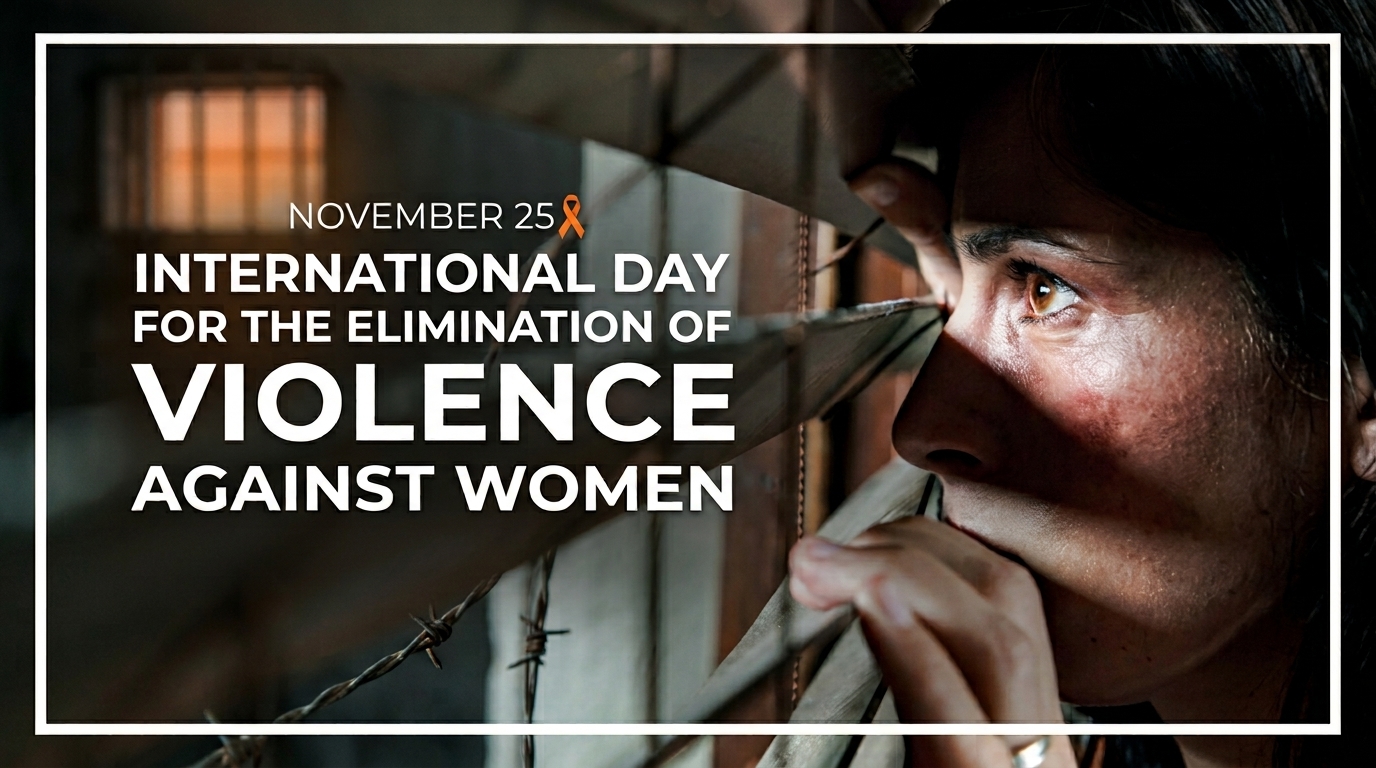
INTERNATIONAL DAY FOR THE ELIMINATION OF VIOLENCE AGAINST WOMEN
Every woman and girl has the right to live a life free from violence, fear, discrimination and abuse. Yet, violence against women remains one of the most widespread violations of human rights around the world. It can happen in homes, workplaces, schools, communities, public spaces and online. It affects women and girls across different ages, backgrounds and social circumstances.
The International Day for the Elimination of Violence against Women, observed every year on 25 November, is a reminder that violence against women is not a private matter to be ignored or normalized. It is a serious social, public health and human rights issue that requires collective action.
UNDERSTANDING VIOLENCE AGAINST WOMEN
Violence against women can take many forms. It may be physical, sexual, emotional, psychological or economic. It can include intimate partner violence, sexual harassment, rape, stalking, trafficking, harmful practices, forced marriage, exploitation and technology-facilitated abuse. Sometimes violence is visible. Other times, it is hidden behind closed doors, silence, threats, manipulation or financial control. A woman does not have to show physical injuries for her experience to be real.
Violence is violence, whether it leaves a visible scar or not.
VIOLENCE CAN TAKE MANY FORMS
Physical violence can include hitting, kicking, beating, choking or any other act intended to cause physical harm.
Sexual violence includes any sexual act or behaviour carried out without freely given consent.
Psychological and emotional abuse can include threats, humiliation, intimidation, manipulation, isolation and constant control.
Economic abuse can involve controlling a woman’s access to money, employment, property or other financial resources in order to make her dependent.
Technology-facilitated violence can include online harassment, threats, cyberstalking, non-consensual sharing of intimate content and other forms of digital abuse.
Regardless of the form it takes, violence can have devastating consequences for a woman’s physical health, mental wellbeing, economic independence, relationships and ability to participate fully in society.
WHY DOES VIOLENCE CONTINUE?
Violence against women is not caused by one factor alone. It can be reinforced by harmful social norms, gender inequality, discrimination, unequal power relationships, economic dependence, victim-blaming, silence and systems that fail to protect survivors or hold perpetrators accountable. One of the most dangerous responses to violence is normalization.
Statements such as “It is a family matter,” “She should endure it,” “That is how relationships are,” or “What did she do to provoke him?” can help create an environment where abuse continues.
We must challenge these attitudes.
A relationship does not give anyone the right to abuse another person.
Marriage does not remove a woman’s right to safety and dignity.
And nothing a woman wears, says or does gives another person the right to violate her.
LISTEN TO SURVIVORS
When a woman speaks about experiencing violence, she deserves to be heard. Survivors should not be blamed, shamed, threatened or pressured into silence. Instead, they need compassion, safety, confidentiality and access to appropriate support. We should ask:
“How can I support you?”
Not:
“Why didn’t you leave?”
“Why did you stay?”
“What did you do?”
The responsibility for violence belongs to the person who chose to commit it.
PREVENTION STARTS WITH ALL OF US
Ending violence against women requires more than responding after harm has occurred. We must address the attitudes and systems that allow violence to happen in the first place.
Families can teach respect, equality, healthy communication and non-violent conflict resolution.
Schools and educators can help young people understand consent, boundaries, equality and healthy relationships.
Communities and leaders can challenge harmful practices, reject victim-blaming and create safe spaces where women can seek help.
Workplaces can establish clear policies against harassment, discrimination and abuse and provide safe reporting mechanisms.
Institutions and organizations can strengthen safeguarding, referral and survivor-support systems.
Governments and policymakers can strengthen laws, services, prevention programmes and justice systems that protect women and girls.
And individuals can speak up when they witness harmful behaviour, support survivors and refuse to normalize violence.
SUPPORTING SURVIVORS
A survivor may need different forms of support depending on her circumstances.
This may include:
- Emotional and psychosocial support
- Medical care
- Legal assistance
- Safe accommodation and protection
- Economic and livelihood support
- Safe and confidential reporting channels
- Community and social support
Support should respect the survivor’s dignity, choices, safety and privacy. No survivor should be forced to tell her story repeatedly simply to receive help.
MEN AND BOYS HAVE A ROLE TO PLAY
Ending violence against women is not only a women’s issue. Men and boys have an important role in challenging harmful ideas about masculinity, power and relationships.
Being an ally means rejecting violence, respecting boundaries, speaking out against harassment, challenging friends who normalize abusive behaviour and promoting healthy relationships built on equality and respect.
Real strength is not control. Real strength is respect.
LET US BREAK THE SILENCE
Silence does not protect women. Ignoring abuse does not make it disappear. Blaming survivors does not prevent violence and looking away allows harmful behaviour to continue.
We must create communities where women feel safe enough to speak, where survivors are supported rather than judged, and where perpetrators are held accountable.
THIS INTERNATIONAL DAY, LET US COMMIT TO ACTION
Let us teach respect from childhood.
Let us challenge gender-based violence wherever we see it.
Let us stop blaming survivors.
Let us create safer homes, schools, workplaces and communities.
Let us strengthen support services for survivors.
Let us speak against harassment and abuse, both offline and online.
Let us demand systems that protect women and girls.
And let us raise our voices until violence against women is no longer treated as normal, inevitable or acceptable.
Every woman deserves safety.
Every girl deserves protection.
Every survivor deserves support and justice.
Every community has a role to play.
On the International Day for the Elimination of Violence against Women, SHEAD Centre stands with women and girls everywhere and calls for sustained action to prevent violence, protect survivors and build communities founded on equality, dignity, safety and respect.